


8 engineering lessons on running AI agents in production
What two security operators learned from a decade of building at petabyte scale


What AI trends will shape analytics in the coming months?








When it comes to AI, there’s a question floating around every organization: how are other companies planning for agentic systems in 2026?
Gartner set out to answer questions like these in a new predictions report. A Gartner report titled Predicts 2026: AI Agents, MCP and Governance are Transforming Analytics, surveyed organizations on their strategic planning for agentic AI.
Peter Corless, Principal Product Marketing Manager at Redpanda, compared Gartner’s findings to his own industry observations in a recent Tech Talk, and shared his predictions for the AI and analytics landscape in the coming months.
In this post, we cover what Gartner’s data showed as well as what Peter believes is on the horizon for analytics and AI. You can also watch Peter’s full Tech Talk on the Top AI Trends Shaping Analytics Through 2026.
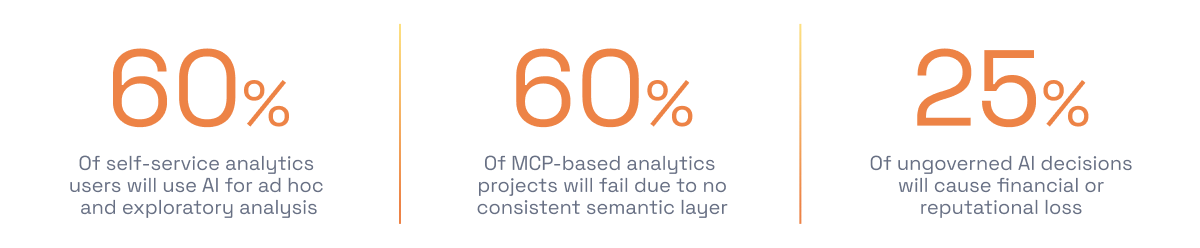
Gartner’s report reaffirms what we’ve already hypothesized (and our reason behind developing the Redpanda Agentic Data Plane): while agentic AI creates new opportunities to work smarter, it also comes with inherent risks and complex governance challenges.
By 2028, Gartner predicts:
Interestingly, when Peter surveyed his Tech Talk audience on the same topics, the responses differed from some of Gartner’s predictions. Watch the full talk to see those survey results.
Now we know what Gartner says, but what AI trends and challenges does Peter think organizations should be paying attention to?
Leaning on the many conversations he’s had at recent meetups and events, Peter compiled his top five predictions about agentic systems (particularly as they relate to analytics).
Historically, many transformative IT technologies have been relegated to a single department head—often the Chief Information Officer (CIO) or Chief Technology Officer (CTO). But for an organization to successfully implement agentic systems, Peter points out the need for across-the-board collaboration from the executive team.
While different C-suite leaders focus on different pieces of the AI puzzle, everyone needs to share responsibility for project success or risk failure.
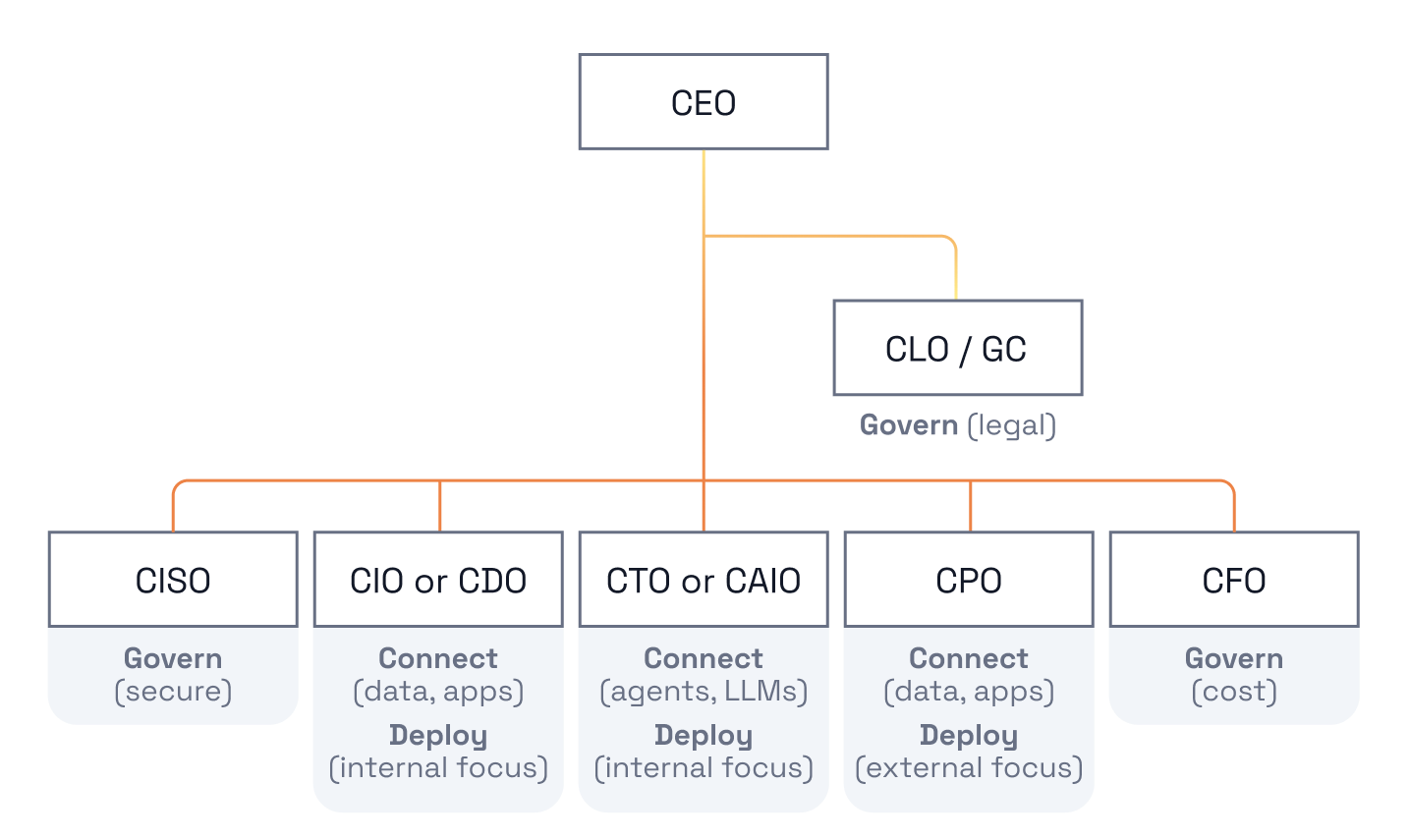
Just as the executive team will need to come together, so too will the different roles involved in these various domains. All of these roles will need to learn new skills and best practices while collaborating across teams to build effective agentic systems.
Speaking of roles in need of new skills, Peter predicts data analysts will undergo one of the most extreme shifts around responsibilities and skillsets. AI is likely to reduce a data analyst’s manual workload for data cleaning, transformation, and basic visualization from 60–70% down to 20–30%.
As a result, data analysts will shift from “query writing” to “AI orchestrating”.
Vibe coding has gained popularity because it allows virtually anyone to use AI to develop applications (without the knowledge or time required to code manually). But enterprise-level vibe coding poses significant operational and security risks.
According to Peter, the immense risks involved in moving vibe coding to full-scale, enterprise-grade production will halt many such projects.
Check out our post on O’Reilly Radar about the risks of AI coding without a plan: Don’t Automate Your Moat: Matching AI Autonomy to Risk and Competitive Stakes.
Governance seems to be the buzzword of the year when it comes to agentic AI (and for good reason). Peter expects this will remain a hot topic as organizations look to solve the inherent challenges of deploying agentic systems.
Peter also notes the emerging AI frameworks and standards that many companies will start to adopt. Here are two to give you an idea:
See the full list in Peter’s full Tech Talk!
{{featured-event}}
With these predictions in mind, Peter believes more organizations will start looking for a unified way to manage agentic systems. Companies need a framework to help address the disconnect between agents and data, and to ensure trust, explainability, and context.
The Redpanda Agentic Data Plane was designed to help you operate and scale agentic systems while delivering governance and control in a single platform. Agentic Data Plane is built on top of the Redpanda streaming infrastructure that many know and love, and it can integrate with 300+ data sources via Redpanda Connect.

Peter’s predictions and the interesting differences between Gartner’s insights and the live audience’s thoughts are definitely worth a watch. This post was just an overview, so grab a brew and watch Peter’s full Tech Talk to learn:
If you’re ready to go further and learn how Agentic Data Plane can help your organization safely scale agentic systems, get in touch with our team!
What two security operators learned from a decade of building at petabyte scale
AWS, Google, and Vercel all shipped the same agent security flaw

What architects are asking about governance, data access, and control for enterprise agents
Subscribe to our VIP (very important panda) mailing list to pounce on the latest blogs, surprise announcements, and community events!
Opt out anytime.
