




Why 99% of the web wasn't built for agents
Kernel CEO Catherine Jue explains why a web built for humans is the real bottleneck for AI agents, and how scoped identity and managed auth can close the gap.









.png)
Building reliable agents begins with a strong data foundation. As AI systems move from experiments to production, teams need clearer ways to connect data, models, and real-world decision-making. In this inaugural episode of “Hello, Agent!” we talk with Nicolas Dupont, Founder and CEO at Cyborg Inc., about how agents are changing the way teams think about automation, streaming data, and system design. Nicolas shares practical lessons from building Cyborg, what breaks when agents scale, and how engineers can design systems that stay flexible as complexity grows.
(00:00) Introduction.
(02:00) Nicolas’ focus on solving technical problems for the real world.
(05:43) Programming in C builds a deep appreciation for low-level systems.
(09:39) Securing proprietary data matters more than models in enterprise AI.
(15:32) Vector data can expose sensitive information to attackers.
(20:59) Auth systems are often weaker than expected, even for sensitive data.
(25:03) Agentic AI removes the perimeter, making zero trust essential.
(30:06) Poisoned data is hard to trace across agent systems.
(35:07) Deleting keys makes sensitive data unreadable immediately.
(40:48) Modern cryptography is no longer a bottleneck, making strong encryption practical.
(45:06) Zero trust isn’t optional — the future of agentic AI depends on it.
Cyborg website
Cyborg Blog: Vector Embeddings Are Not One-Way Hashes
Thanks for listening to “Hello Agent!: The podcast at the intersection of data & agents.” If you loved this episode, let us know with a 5-star review! Remember to subscribe so you don’t miss an episode. Learn more about Redpanda's Agentic Data Plane.

Subscribe and never miss a Redpanda 'Hello, Agent' podcast. We hate spam and will never sell your contact information.
Kernel CEO Catherine Jue explains why a web built for humans is the real bottleneck for AI agents, and how scoped identity and managed auth can close the gap.
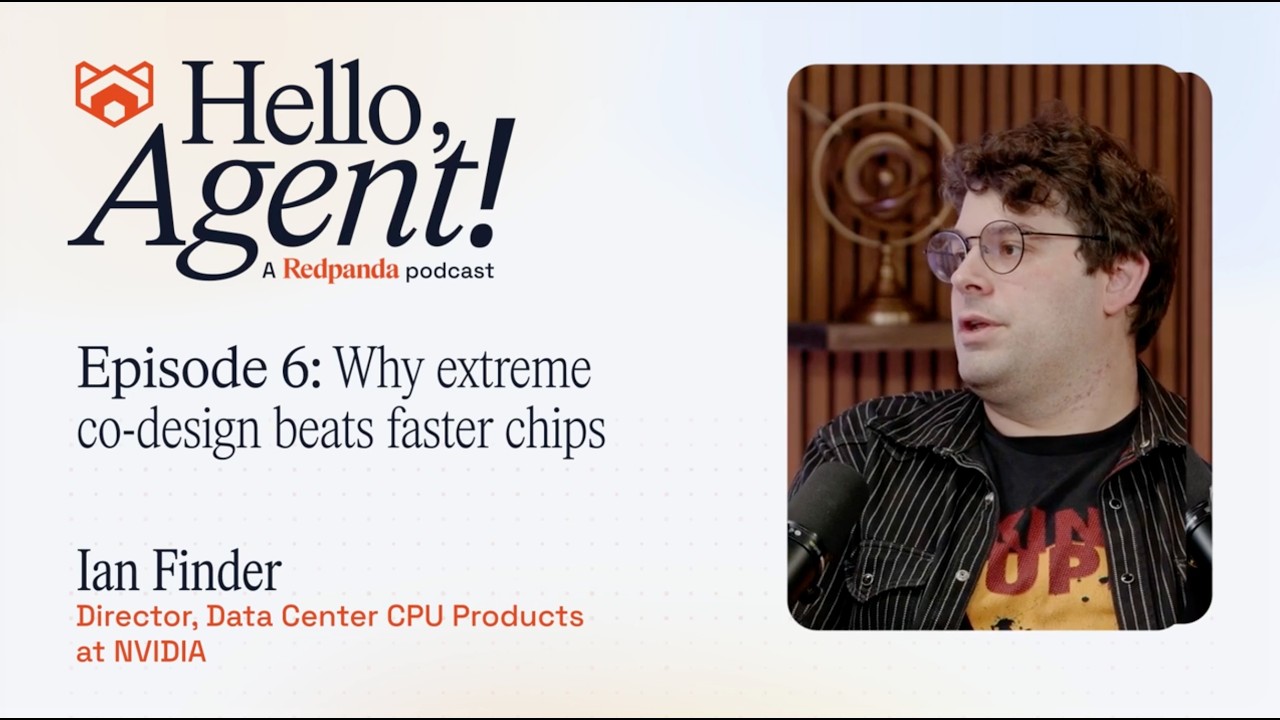
Why do agents stress CPUs before GPUs? NVIDIA's Ian Finder on the architecture gap no one saw coming—and the chip built to close it.
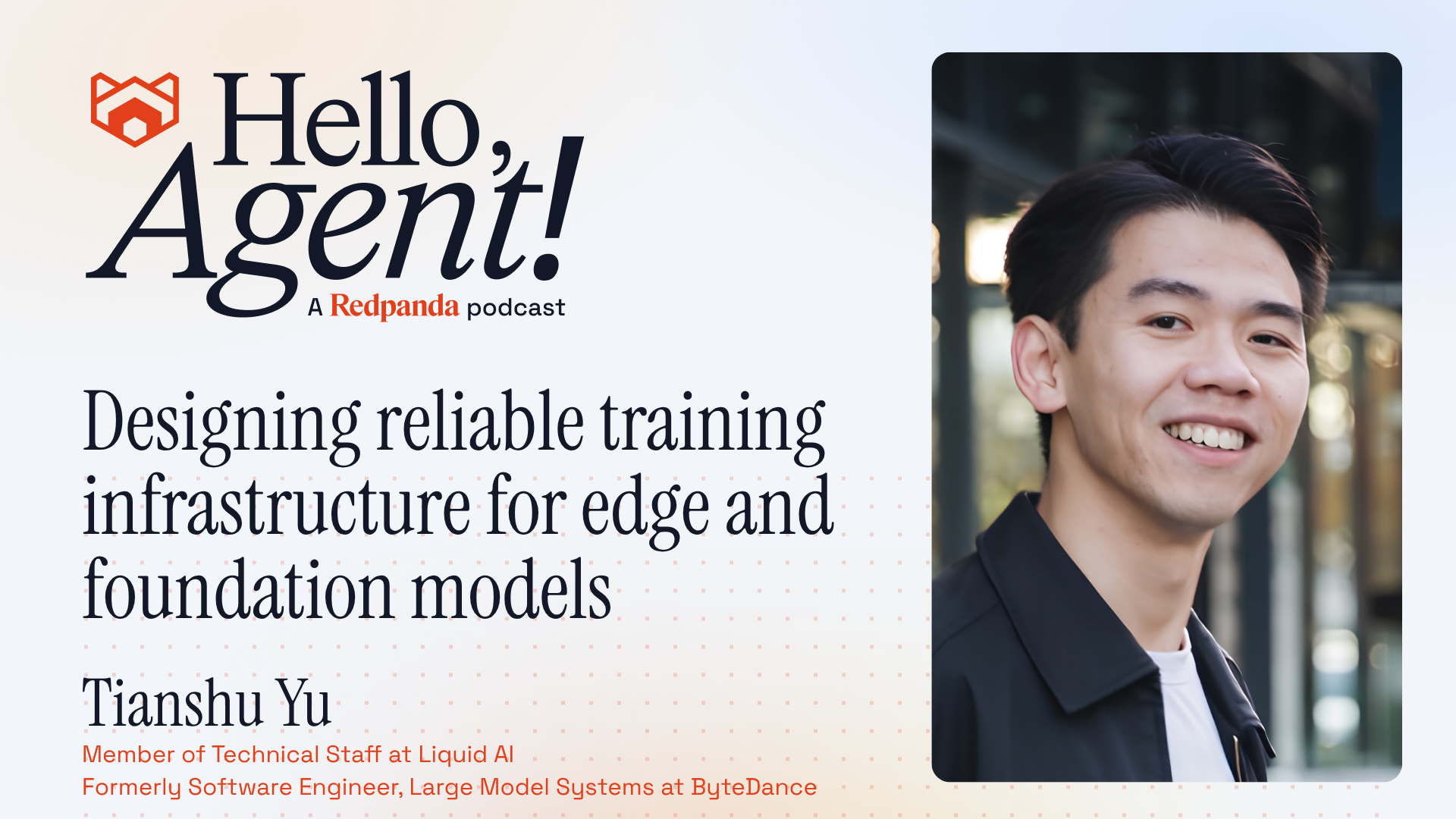
Tianshu Yu of Liquid AI on why reliable training infrastructure is a prerequisite for scaling foundation models — and a rigorous engineering layer.
.png)
Control plane meets data plane: Bassam Tabbara (Crossplane creator) and Alex Gallego explore how agents need governed access to both infrastructure and data.
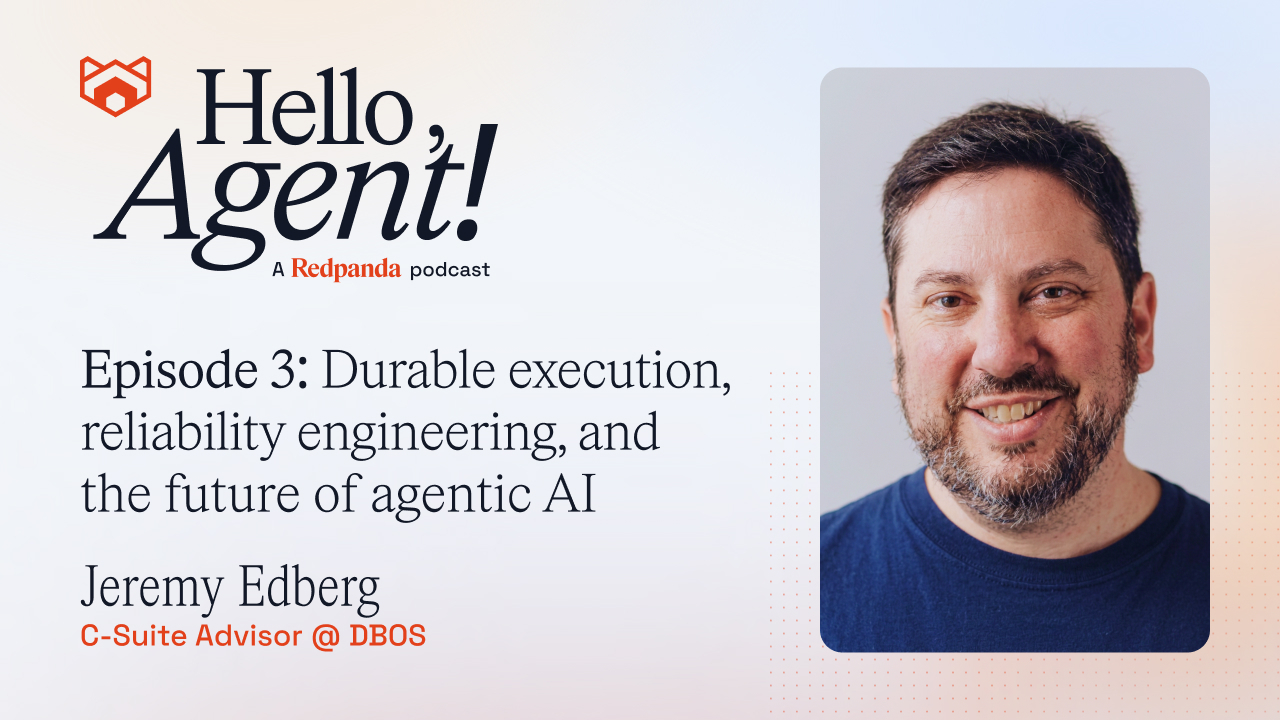
Jeremy Edberg explains how durable execution lets AI agents save state, replay, and resume after failure—filling a key infrastructure gap.
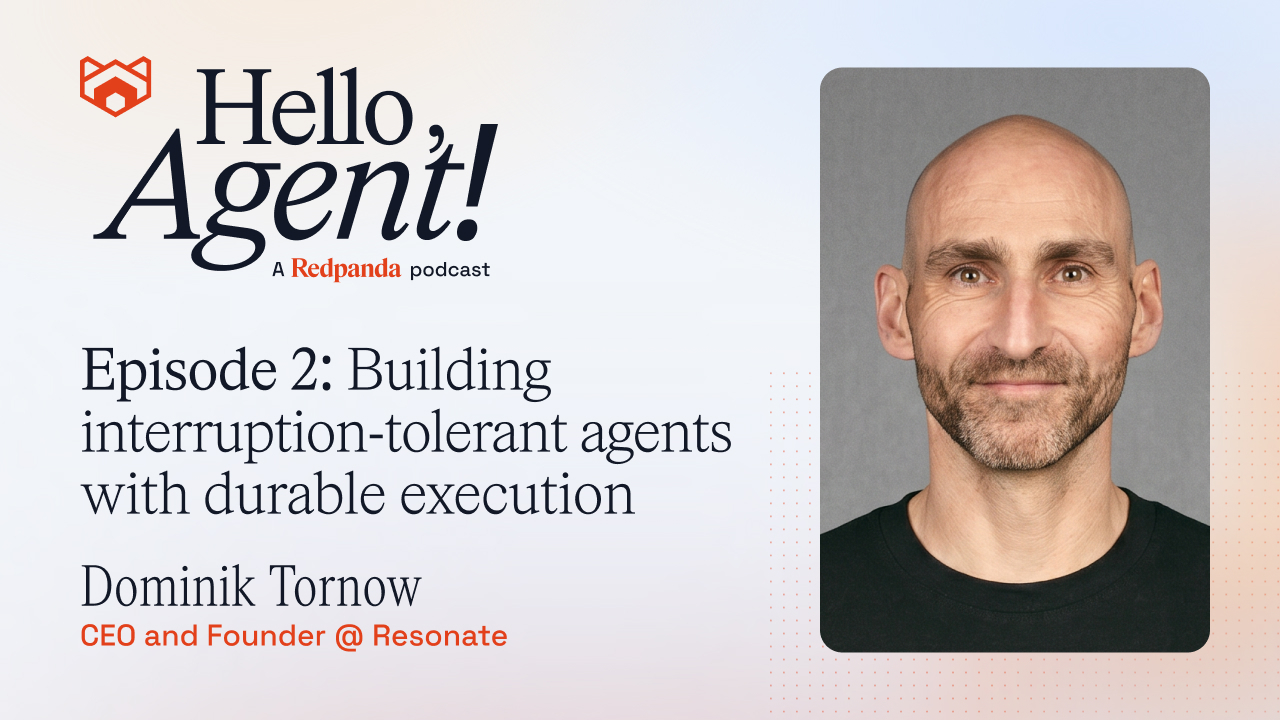
Dominik Tornow explores why durable execution is critical for reliable AI agents and how durable promises simplify building long-running, interruption-tolerant multi




Learn how industry pioneers are building, deploying, and scaling enterprise AI agents. Sign up to get new episodes in your inbox.