
A model-based AI kill switch: an exercise in performance art
Good intentions don’t work. Mechanisms do.


Why the demo worked but the rollout didn’t—and what you need to successfully scale agents


We’ve said it before: building a demo agent is the easy part. Where we see teams struggle is ensuring that agent works in production when it’s up against messy data, infrastructure that sometimes glitches, and complex regulatory and governance needs.
In a recent Data & AI Weekly episode, “From Pilot to Production: What It Actually Takes to Scale Agentic AI,” Redpanda CMO Melissa Czapiga discussed the realities of taking agents to production with Jimmy Astle, a cybersecurity veteran and co-founder of AI startup Onebee. They chatted about what separates a flashy pilot agent from a production workhorse that people trust—and why the technology shift is only part of the journey.
Below we cover the conversation’s key takeaways for engineers and technical teams who own or are planning agentic projects. Be sure to watch the full 30-minute video to catch all of Jimmy’s insights.
{{featured-event}}
Scaling agents isn’t primarily a model problem. According to Jimmy, the real challenges are getting your data in order and shifting how your people work.
According to Gartner, 60% of AI projects will be abandoned due to data issues, because an organization’s data isn’t “AI-ready.” Before you can build out agentic systems, you need answers to basic questions about your data:
Then you need to get your entire team on board. Technology tends to outpace a workforce’s ability to adopt it, so you want to hand your people an easy-to-follow adoption process.
Jimmy shares a 4-step process to help employees re-learn how to work with help from AI—and warns that this is a lengthy process. Expect the journey to take a year or more, as people acclimate to performing daily tasks using agents.
According to Jimmy, most projects stall between steps 2 and 3 and boil down to issues with building trust or building habits.
Watch the full Data & AI Weekly episode to hear all of Jimmy’s thoughts on how an organization can successfully follow this process, including why you should treat agents as an extension of your workforce instead of another tool in your tech stack.
Demos are straightforward, and the stakes are relatively simple, while agents in production must be able to navigate imperfect conditions and have the power to impact live systems. Here’s a quick look at how the environments compare:
If a pilot looks good in a demo but disappoints in real-world circumstances, Jimmy suggests starting smaller and narrowing the agent’s scope.
When you’re building on a laptop, it’s easy to overlook requirements you’d need for a production-ready agent. These include:
The other big piece to keep in mind here is who owns the infrastructure. As Jimmy points out, building and managing all of these components in-house requires a lot of engineering hours—and can end up taking time away from customer-facing product features and fixes. Evaluate what makes more sense for your team: building or buying.
Looking for help scaling and managing agents safely? The Redpanda Agentic Data Plane provides a single governed gateway between your apps and agents, with built-in identity, auditing, scope limits, and kill switches. Plus it works with any model, API, database, and cloud.
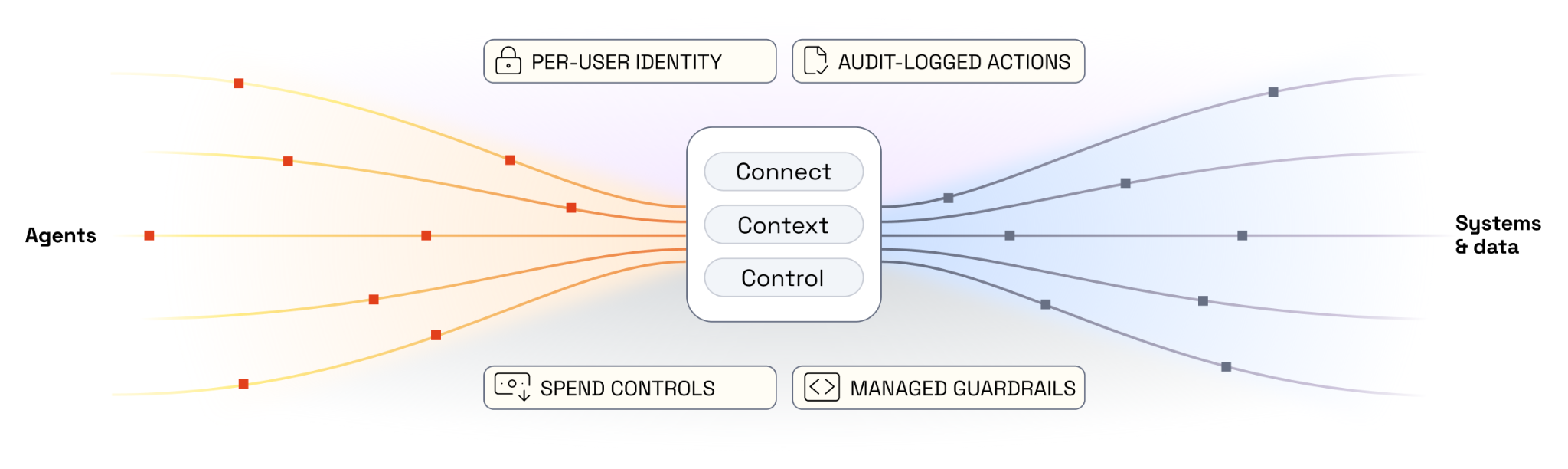
Learn more from our Head of AI about what an agentic data plane is, and what makes the Redpanda Agentic Data Plane different.
If your team is struggling to take agents from demo to production, this Data & AI Weekly episode is a must-watch. Check out the full episode on From Pilot to Production: What It Actually Takes to Scale Agentic AI to learn:
And, if you’re ready to build out your governance infrastructure for enterprise agents, book a demo to see the Redpanda Agentic Data Plane in action.
Good intentions don’t work. Mechanisms do.
What two security operators learned from a decade of building at petabyte scale

What architects are asking about governance, data access, and control for enterprise agents
Subscribe to our VIP (very important panda) mailing list to pounce on the latest blogs, surprise announcements, and community events!
Opt out anytime.