A sandbox is not a security model for enterprise agents
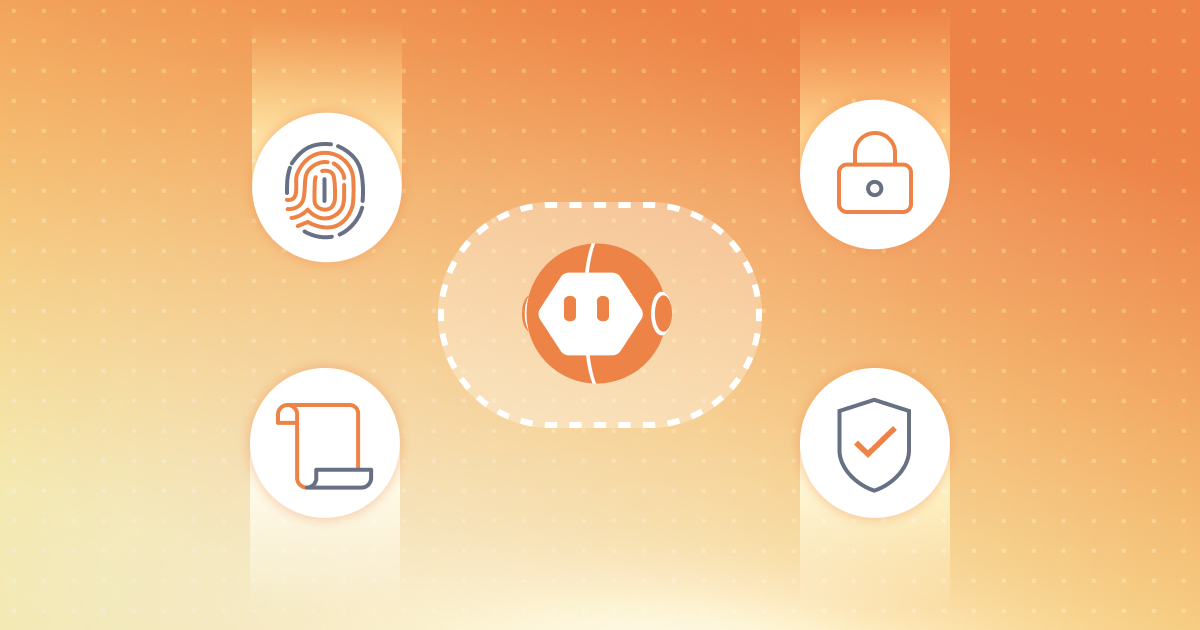
OpenClaw runs well on a developer's own machine. At company scale, agents need a gateway, full transcripts, a token vault and sandboxed compute that can only reach the gateway.


This Hacker News comment captures the problem neatly:
Am I missing something? Why is everyone talking about sandboxes when it comes to OpenClaw? To me it's like giving your dog a stack of important documents, then being worried he might eat them, so you put the dog in a crate, together with the documents.
I thought the whole problem with that idea was that in order for the agent to be useful, you have to connect it to your calendar, your e-mail provider and other services so it can do stuff on your behalf, but also creating chaos and destruction.
There is no real security model for OpenClaw. There is an agent that can do whatever it likes with a set of credentials on a Mac mini. It can leak those credentials, sell them on the dark web, or edit its own SOUL.md.
Personal AI agents can amplify an entire enterprise, but the benefits shouldn't go only to people willing to give up all sense of security. The answer is to have governance and controls in place for agents, so nobody has to take security shortcuts to adopt powerful ones. Here is what that looks like.

It looks more complicated than OpenClaw in a box. That complexity is fundamental, and each part has a job.
A gateway: one choke point for everything the agent touches
The whole architecture is built around the gateway. It is a single choke point for all agent access to external systems and information. It gives full observability into what agents are doing: every tool call and model invocation is recorded, so you can reconstruct why a loan was approved or who wrote the prompt that pushed new code to production. It's also the central place to enforce rate limits and apply guardrails.
And it's where the kill switch goes. To stop a rogue agent leaking your Salesforce customer data, there's no need to hunt down API access across 27 services. You turn it off at one service, or a set of services, for your entire digital workforce at once. In Redpanda's Agentic Data Plane, that role is played by the AI Gateway for models and the MCP Gateway for tools.
Transcripts: know why, not just what
You want to know why and how an agent did something, not just what it did. Transcripts let you govern the actions and tools your agents have, and they also make agent performance reviews possible: run different versions of an agent, for example giving similar agents different tools for the same job, then compare how they perform.
Full transcripts capture inputs, outputs, tool calls, token usage and the agent's reasoning. Explicit guardrails let you act on a single request or response; transcripts let you correlate what is happening across a multi-agent system or track regressions over time. Without them, you're flying blind.
A token vault: don't give the dog your keys
When OpenClaw connects to your calendar or Salesforce, it holds credentials, probably in a config file and probably with more permissions than it needs. That's the dog with your documents. The sandbox doesn't help, because the credentials are already inside it.
A token vault handles credentials out of band. The agent never holds your Salesforce token. When it needs to act, the gateway requests a short-lived, scoped token from the vault for exactly that operation.
It also enables patterns that are otherwise impossible. Many enterprise systems, such as Salesforce and ServiceNow, don't support service accounts at all, only user-based authentication. On-behalf-of (OBO) flows through a token vault let an agent act in the context of a real user, with that user's actual permissions, without ever holding their credentials. You can't build a real multi-tenant agent without this.
Sandboxed compute that can only reach the gateway
Sandboxes are right. You give your human workforce computers, after all. Giving agents compute is one of the main reasons Claude Code has taken over so much software development: language models are far better at drawing insight from tool output when they can post-process it with standard Unix commands, and a sandbox is the safest way to allow that.
But the sandbox needs very limited network access, so it can only go through the gateway, which then mediates every interaction with the outside world, just as a limited set of tools would for an agent without a sandbox. Authentication must be passed as out-of-band metadata tied to the agent's identity, so the agent can perform exactly the actions it needs through the gateway, only for that session. Redpanda demonstrates this with its "agentic gateway interface," the agi CLI (yes, the name is a play on that AGI), which lets an agent call the AI gateway from inside the sandbox:
A dynamic, self-describing CLI mediates access to external tools. Agents can discover and invoke services outside the sandbox in a way that fits the composable Unix workflow, while every call stays governed by the gateway. Managed Agents work this way by default.
Don't give the dog your documents
OpenClaw has been wildly successful, and for a developer running it on a dedicated machine with limited access and scope, the threat model is manageable. You're not running it on company cloud infrastructure or giving it production systems. The documents and the dog are both yours.
The problem appears when an organization tries to scale that model: when IT decides to "just run it in a VM" for each department, or someone decides the sandbox is enough governance for production. It isn't. The threat model is completely different at that point. Authentication and access keys have to be passed as out-of-band metadata, because the agent can't leak or abuse what it can't see.
Gateway + transcripts + token vault + sandboxed compute = agents in production.
That's the minimum that gives anyone, developer, security team or CIO, real control over their agents. Once you have it, you stop worrying about the dog, because you stopped giving it your documents in the first place.
A sandbox contains the agent but not the credentials you put inside it with the agent. Production agents need a gateway every call goes through, full transcripts, a token vault that keeps keys out of the agent's hands, and sandboxed compute that can only talk to the gateway.
Signals shortlist
- Demystifying evals for AI agents (Anthropic)
- Why is everyone talking about sandboxes for OpenClaw? (Hacker News)
- Hacker News comment quoted in the introduction.
- Anthropic, demystifying evals for AI agents.
- Adapted from Tyler Rockwood's post of April 14, 2026.
Ground Truth is written and edited by Redpanda and invited contributors. Research methodology and sources are listed in each story.